
The hot air balloon was invented by the French brothers Joseph-Michel and Jacques-Étienne Montgolfier, and the first hot air balloon flew in public on 4 June 1783 in Annonay, in south-east France. That unmanned balloon of cloth and paper rose an estimated 1,600–2,000 metres; less than six months later, on 21 November 1783, two men made the first free flight in one over Paris.
Hot air balloon history at a glance
- 3rd century – paper lanterns lifted by hot air are used for military signalling in China.
- 8 August 1709 – Bartolomeu de Gusmão lifts a small hot air balloon to the ceiling of a hall in Lisbon, before King John V of Portugal.
- 4 June 1783 – first public flight of a Montgolfier hot air balloon, unmanned, in Annonay.
- 27 August 1783 – Jacques Charles and the Robert brothers launch the first hydrogen balloon from the Champ de Mars, Paris.
- 19 September 1783 – a sheep, a duck and a rooster fly at Versailles: the first passengers.
- 21 November 1783 – first free flight with people on board: Pilâtre de Rozier and the Marquis d'Arlandes, over Paris.
- 1 December 1783 – Charles and Nicolas-Louis Robert make the first manned flight in a hydrogen balloon.
- 7 January 1785 – Jean-Pierre Blanchard and John Jeffries cross the English Channel by balloon.
- 22 October 1960 – Ed Yost makes the first free flight of a modern hot air balloon with a propane burner, in Nebraska, USA.
- 2–3 July 1987 – Richard Branson and Per Lindstrand make the first crossing of the Atlantic in a hot air balloon.
- March 1999 – Bertrand Piccard and Brian Jones complete the first non-stop flight around the world in a balloon, the Breitling Orbiter 3.
Who invented the hot air balloon?
The hot air balloon as we know it was invented by Joseph-Michel and Jacques-Étienne Montgolfier, two brothers from a family of paper manufacturers in Annonay, France. Inspired by watching smoke and hot air rise from a fire, they started experimenting with bags of fabric and paper in 1782, and in 1783 they were ready to show their invention in public. Balloons heated by a fire were named montgolfières after them, and that is still the French word for a hot air balloon.
Before the Montgolfiers: sky lanterns and Bartolomeu de Gusmão
The idea of hot air lifting an object is much older. In China, small paper lanterns that rise on the hot air of a flame were used for military signalling as early as the 3rd century. In Europe, the Jesuit priest Bartolomeu de Gusmão, born in Santos in colonial Brazil, demonstrated a small unmanned hot air balloon on 8 August 1709 in a hall of the Casa da Índia in Lisbon, in front of King John V of Portugal: the balloon rose to the ceiling. It would be another 74 years before a hot air balloon carried anyone into the sky.
The first hot air balloon flight: Annonay, 4 June 1783
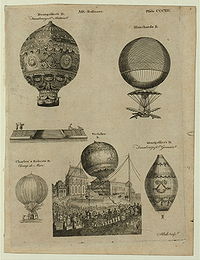
On 4 June 1783 the Montgolfiers gave the first public demonstration of their balloon in Annonay. It was made of sackcloth lined inside with thin layers of paper, assembled from four pieces held together with some 1,800 buttons. It held about 790 m³ of air and weighed around 225 kg.
Heated over a fire and released with nobody on board, it flew for roughly 10 minutes, reached an estimated 1,600–2,000 metres and came down about 2 km away. The principle was exactly the one balloons still use today: hot air is lighter than the cooler air around it, so it rises (more on this in why a hot air balloon flies).
1783, the race to conquer the sky
The hydrogen rival: Jacques Charles, 27 August 1783
The Montgolfiers were not alone. In Paris, the physicist Jacques Charles and the brothers Anne-Jean and Nicolas-Louis Robert built a different kind of balloon, filled not with hot air but with hydrogen. On 27 August 1783 they launched it, unmanned, from the Champ de Mars. It flew north for about 45 minutes and landed 21 km away in the village of Gonesse, where frightened villagers destroyed it.
The first passengers: a sheep, a duck and a rooster (19 September 1783)
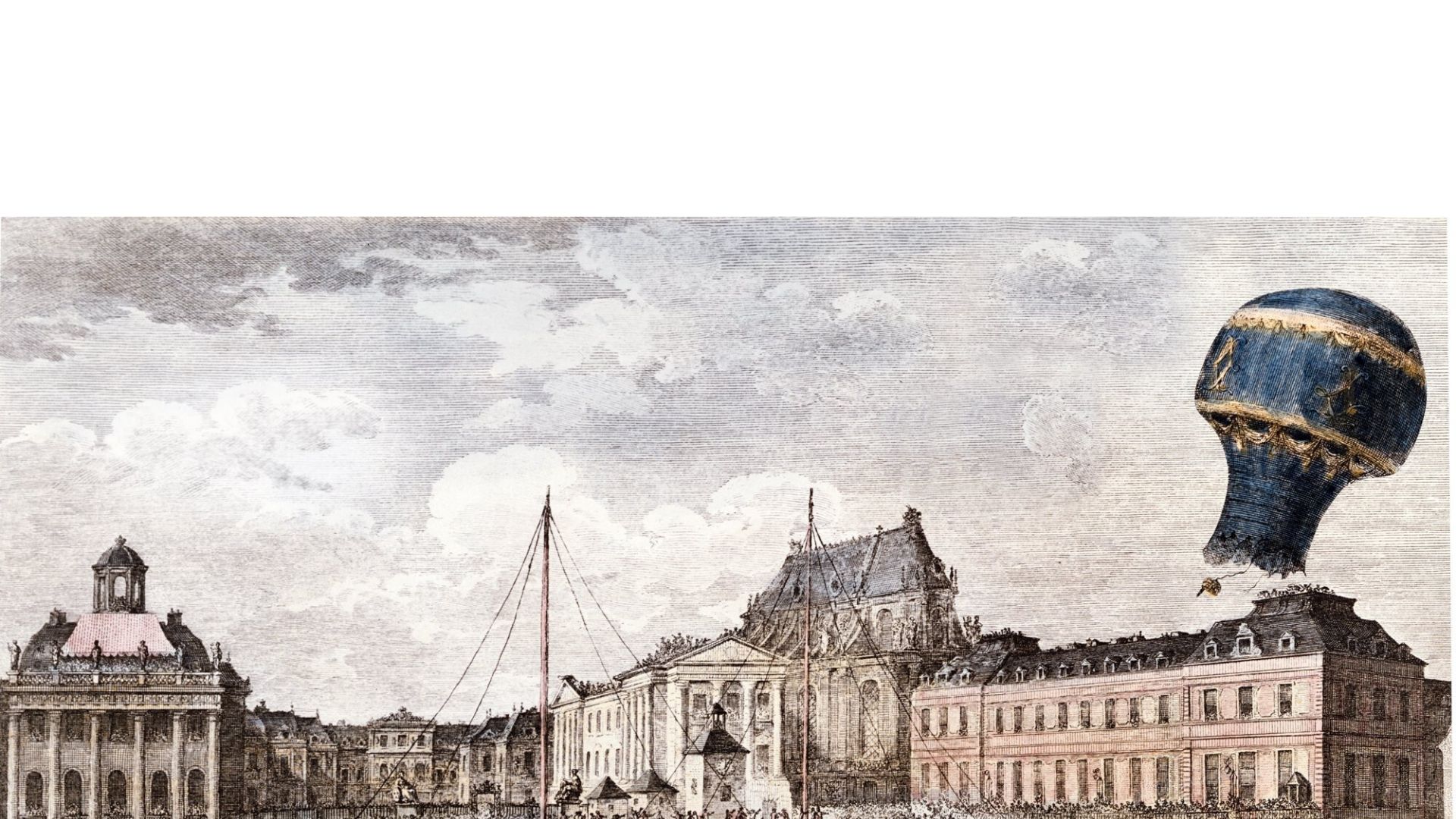
Nobody knew whether a living creature could survive up there, so the next test carried animals. On 19 September 1783, at the Palace of Versailles and in front of King Louis XVI and Queen Marie Antoinette, a Montgolfier balloon lifted a cage with a sheep named Montauciel, a duck and a rooster. The flight lasted about 8 minutes, covered around 3 km and reached about 500 metres. All three animals landed safely, which opened the way to the first human flight.
The first people to fly: 21 November 1783
After tethered test ascents in Paris in October, the first free flight with people on board took place on 21 November 1783. Jean-François Pilâtre de Rozier and the Marquis d'Arlandes took off in a Montgolfier balloon from the grounds of the Château de la Muette, near the Bois de Boulogne, keeping the air hot by feeding a fire carried beneath the balloon. They flew for about 25 minutes, rose to roughly 900 metres and landed some 9 km away at the Butte-aux-Cailles, then outside the city walls.
Ten days later: the first manned gas balloon (1 December 1783)
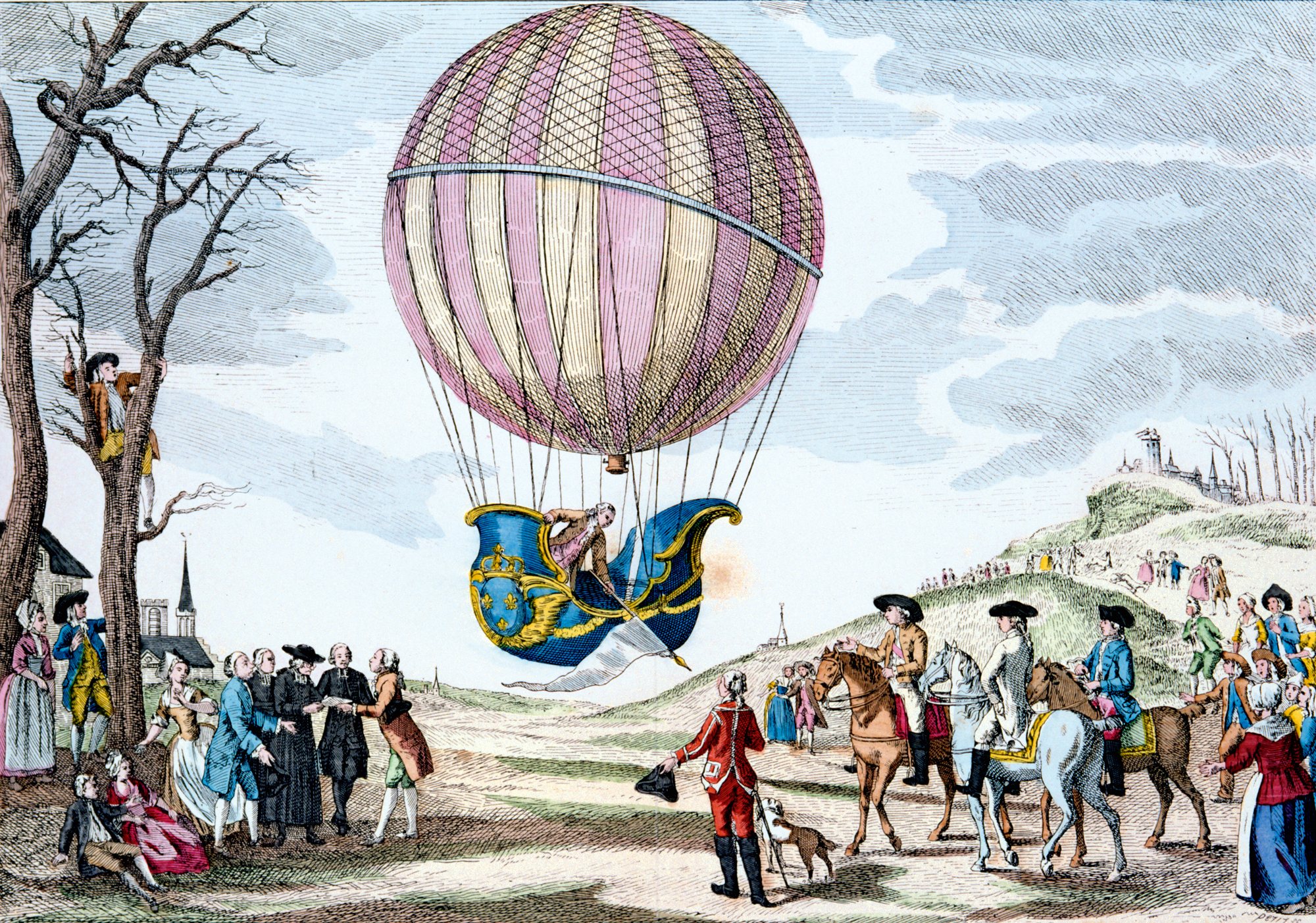
On 1 December 1783, Jacques Charles and Nicolas-Louis Robert took off from the Jardin des Tuileries in Paris in their hydrogen balloon. They controlled their height by throwing out sand ballast and flew for just over two hours, covering 36 km before landing at Nesles-la-Vallée. Charles then went up again alone and rose to about 3,000 metres. In a single year, both rival ideas, hot air and gas, had carried people into the sky.
After 1783: the Channel, the first air accident and Spain
Ballooning spread across Europe within months. On 7 January 1785, Jean-Pierre Blanchard and John Jeffries crossed the English Channel from England to France in a hydrogen balloon. On 15 June 1785, Pilâtre de Rozier tried to cross in the other direction in a hybrid balloon combining hydrogen and hot air, a design still called a Rozière. It caught fire and crashed shortly after taking off from Boulogne-sur-Mer, killing him and his companion Pierre Romain: the first known fatalities in an air crash.
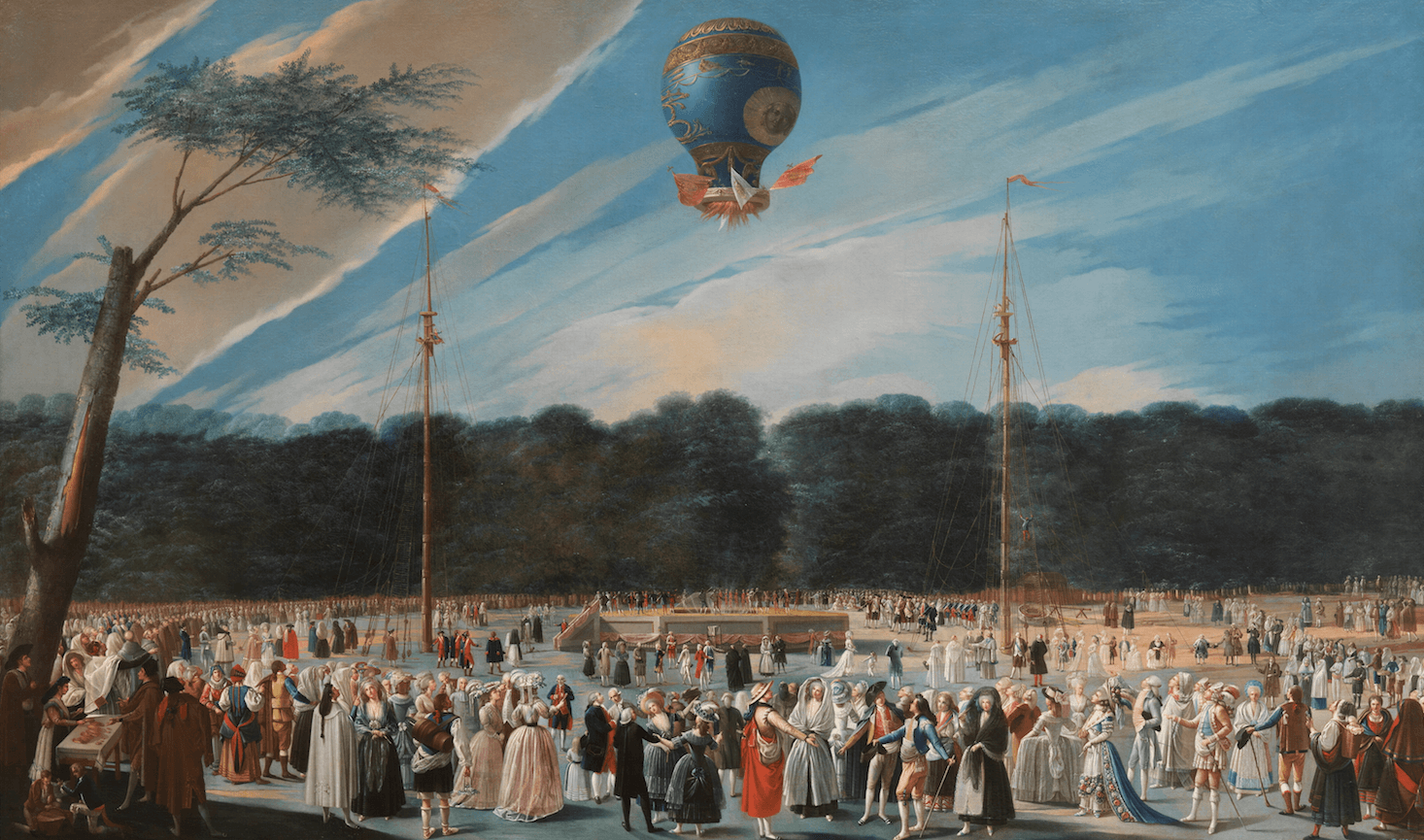
News of the flights reached Spain just as fast. In late November 1783 the engineer Agustín de Betancourt sent up an unmanned balloon in front of the royal court, and in 1784 balloon ascents in the royal gardens of Aranjuez drew large crowds, a scene captured by the painter Antonio Carnicero.
The modern hot air balloon, from 1960 to today
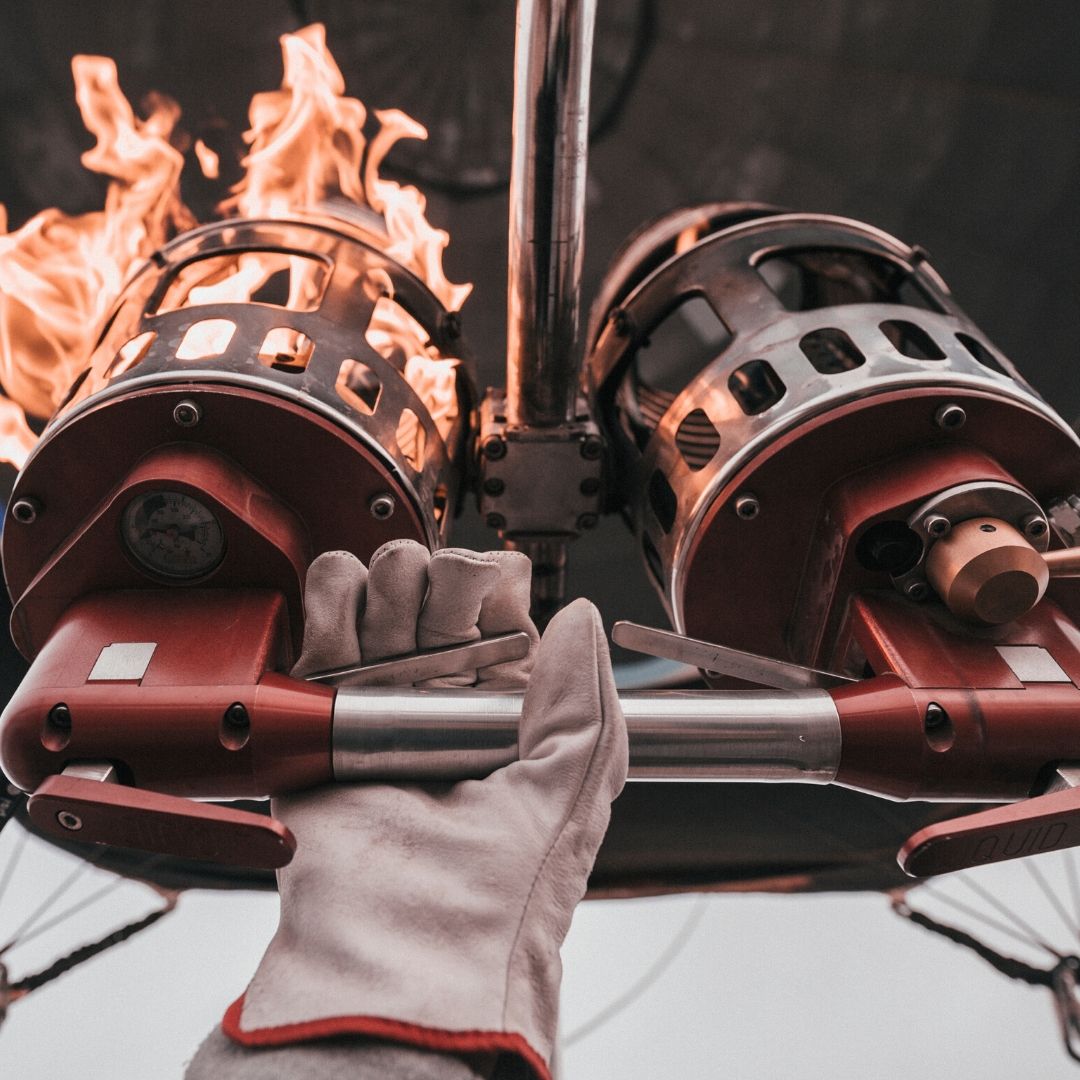
For a long time after 1783 most balloonists preferred gas balloons, which could stay aloft far longer than a balloon heated by an open fire. The hot air balloon came back thanks to the American Ed Yost, often called the father of the modern hot air balloon. On 22 October 1960, in Bruning, Nebraska, he made the first free flight of a balloon carrying its own propane burner, with an envelope of heat-resistant synthetic fabric. That design is the one used today, on the same principle as in 1783 but with modern materials:
- the envelope, sewn from ripstop nylon or polyester instead of paper and cloth;
- the burner, fed with liquid propane from cylinders carried in the basket, instead of an open fire;
- the basket, and the parachute vent at the top that lets the pilot release hot air to descend;
- flight instruments such as the altimeter and the variometer.
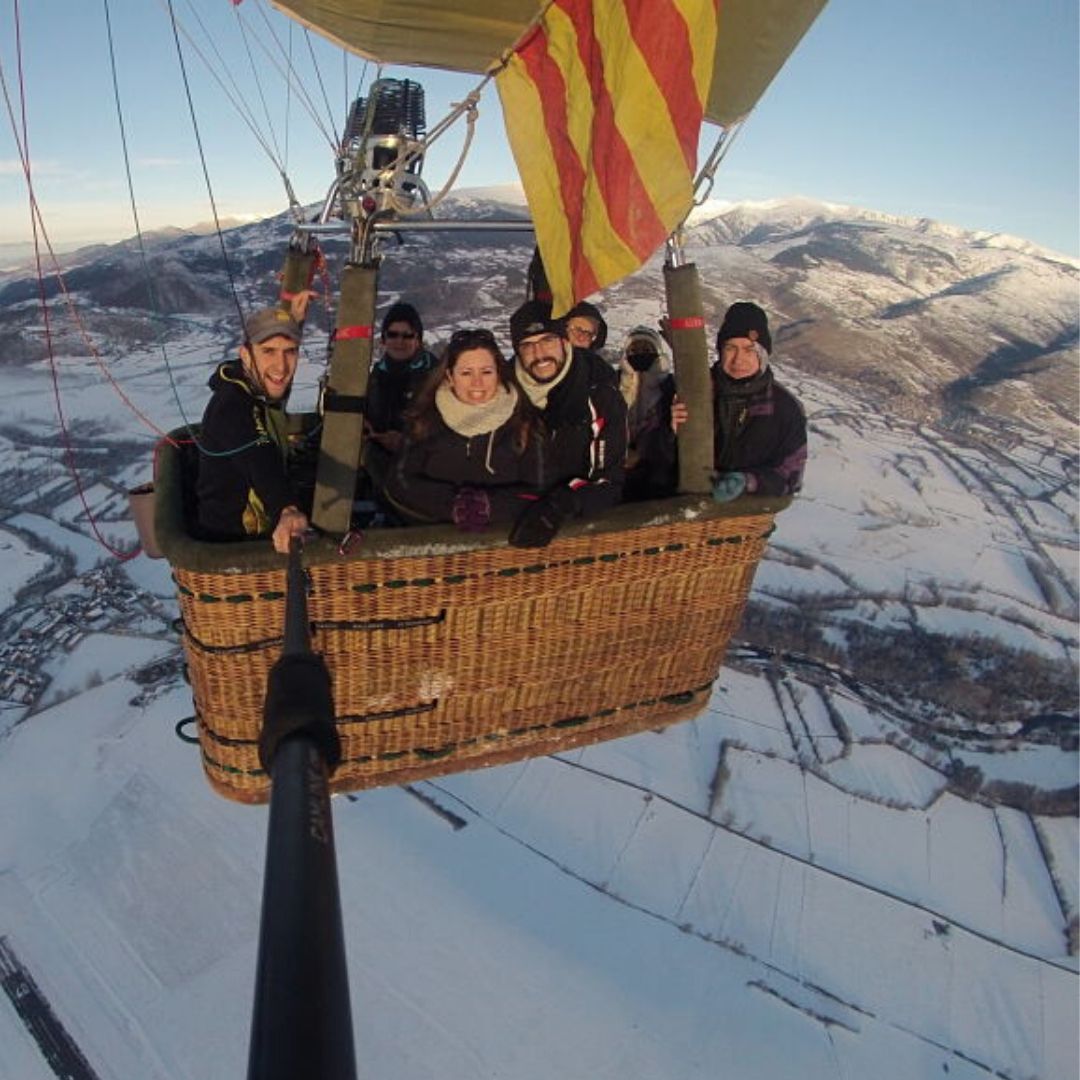
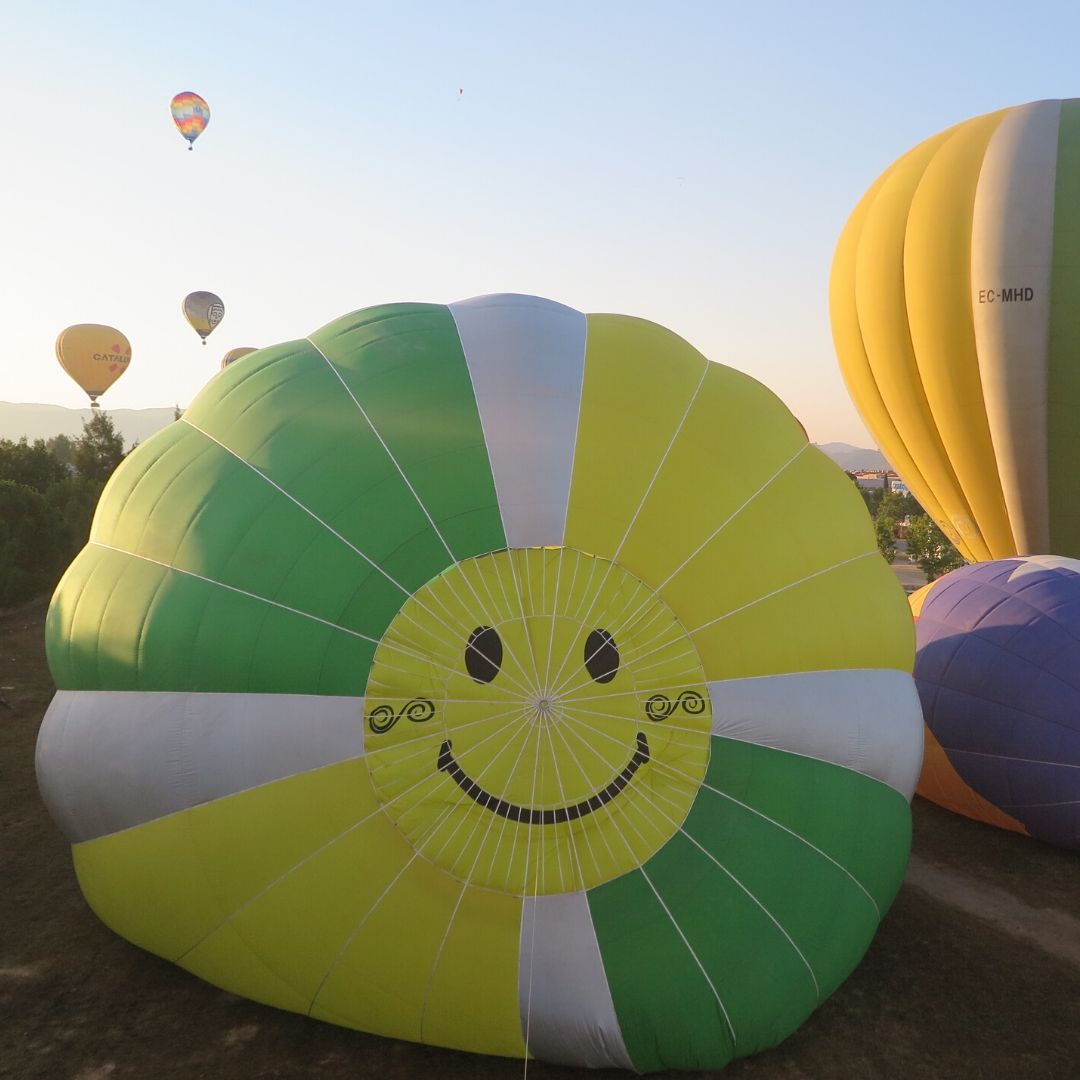
Long-distance records followed. In July 1987 Richard Branson and Per Lindstrand made the first crossing of the Atlantic in a hot air balloon, and in March 1999 Bertrand Piccard and Brian Jones flew non-stop around the world in the Breitling Orbiter 3, a Rozière balloon, the hybrid type Pilâtre de Rozier had tried in 1785. Today hundreds of balloons gather every year at famous hot air balloon festivals such as Albuquerque, León and Igualada.
Want to know more? Read what a hot air balloon is, see every part on our labelled diagram of the parts of a hot air balloon, or follow a real flight in our full guide to how a hot air balloon works.
Fly the invention of 1783 yourself. Camins de Vent has been organising balloon flights for more than 20 years, with EASA-certified pilots, in six zones of Catalonia: Anoia, Osona, Bages, Cerdanya, Costa Brava and the province of Lleida. The flight lasts about 1 hour (about 3 hours for the whole experience) and ends with a cava toast, a diploma and photos.
Weekday flight 159 € per person, any-day flight 179 € per person, with an open-date ticket valid for 365 days; if the weather is not right, you get a new date at no cost. Book your hot air balloon flight in Catalonia →
Hot air balloon history: frequently asked questions
Who invented the hot air balloon?
The hot air balloon was invented by the Montgolfier brothers, Joseph-Michel and Jacques-Étienne Montgolfier, paper manufacturers from Annonay in France. They began experimenting in 1782 and gave the first public demonstration on 4 June 1783. Earlier, in 1709, the priest Bartolomeu de Gusmão had shown a small unmanned hot air balloon to the court of King John V of Portugal in Lisbon.
When was the first hot air balloon flight?
The first public hot air balloon flight took place on 4 June 1783 in Annonay, France. The unmanned Montgolfier balloon flew for about 10 minutes, reached an estimated 1,600–2,000 metres and came down about 2 km away.
When was the first manned hot air balloon flight?
On 21 November 1783 in Paris, Jean-François Pilâtre de Rozier and the Marquis d'Arlandes made the first free flight with people on board, in a Montgolfier balloon. They flew for about 25 minutes, covered some 9 km and reached roughly 900 metres.
What was the first hot air balloon made of?
The Montgolfier balloon of June 1783 was made of sackcloth lined inside with thin layers of paper, assembled from four pieces held together with about 1,800 buttons. It held around 790 m³ of air and weighed about 225 kg. Modern envelopes are sewn from ripstop nylon or polyester.
Who were the first passengers in a hot air balloon?
A sheep called Montauciel, a duck and a rooster. They flew at Versailles on 19 September 1783, in front of King Louis XVI and Queen Marie Antoinette, for about 8 minutes, and all three landed unharmed.


