
A hot air balloon flies because the burner heats the air inside its envelope, and hot air is less dense, so lighter, than the cooler air outside. As the air warms it expands and some of it spills out of the open mouth at the bottom, so the envelope holds less air by weight than the same volume of outside air. The surrounding air then pushes the balloon upwards with a force equal to the weight of the air it displaces (Archimedes' principle). When that buoyancy is greater than the weight of the envelope, basket, fuel and people, the balloon rises.
How does the pilot climb and descend? Firing the burner heats the air and the balloon climbs. Letting the air cool, or opening the parachute vent at the top to release hot air, makes it descend. A balloon cannot be steered sideways. It moves with the wind, and the pilot changes height to catch winds blowing in different directions, watching the instruments (altimeter and variometer). Cool, calm mornings give the most lift and the gentlest winds, which is why balloons usually fly at sunrise.
Parts of a hot air balloon (labelled diagram) · What is a hot air balloon? · How a flight works, step by step · How a balloon is prepared for take-off · Book a balloon flight
Why does a hot air balloon flies?

How does a
hot air balloon fly?
To enhance the confinement due to COVID-19, we have committed to continuing to publish information and knowledge about hot air balloons.
In the first post we talked about the different parts of a hot air balloon.
Today, we are going to talk about how and why a hot air balloon flies.
Why does a hot air balloon fly?
A simple concept to understand why a hot air balloon flies is because the air inside the envelope, when heated, increases the pressure.
The general gas law says:
PV = nRT
To simplify that: Increasing the temperature will increase the volume or pressure, or both at the same time.
In the case of the hot air balloon, when the air inside the envelope is heated, it increases in volume until it occupies every corner. Once the envelope is tense, if we keep heating the air inside it (which is increasing in volume) it will start to go out of the envelope, emptying the density of air inside it. This will make the air inside the envelope lighter than the air outside and the balloon will rise.
During the flight, the pilot maintains the hot air balloon temperature by operating the burner.
The temperature of the envelope will determine the speed of rise and descent, as well as the height of the hot air balloon.
These parameters are monitored throughout the flight by instruments such as the variometer, to know the vertical speed (ascent and descent speed), the altimeter and the GPS to know the horizontal speed, altitude and exact position on the ground.
In this video of QUÈQUICOM you will see in a visual way what you just read. It is in catalan, but we are sure you will understand it as well, as it is visual.
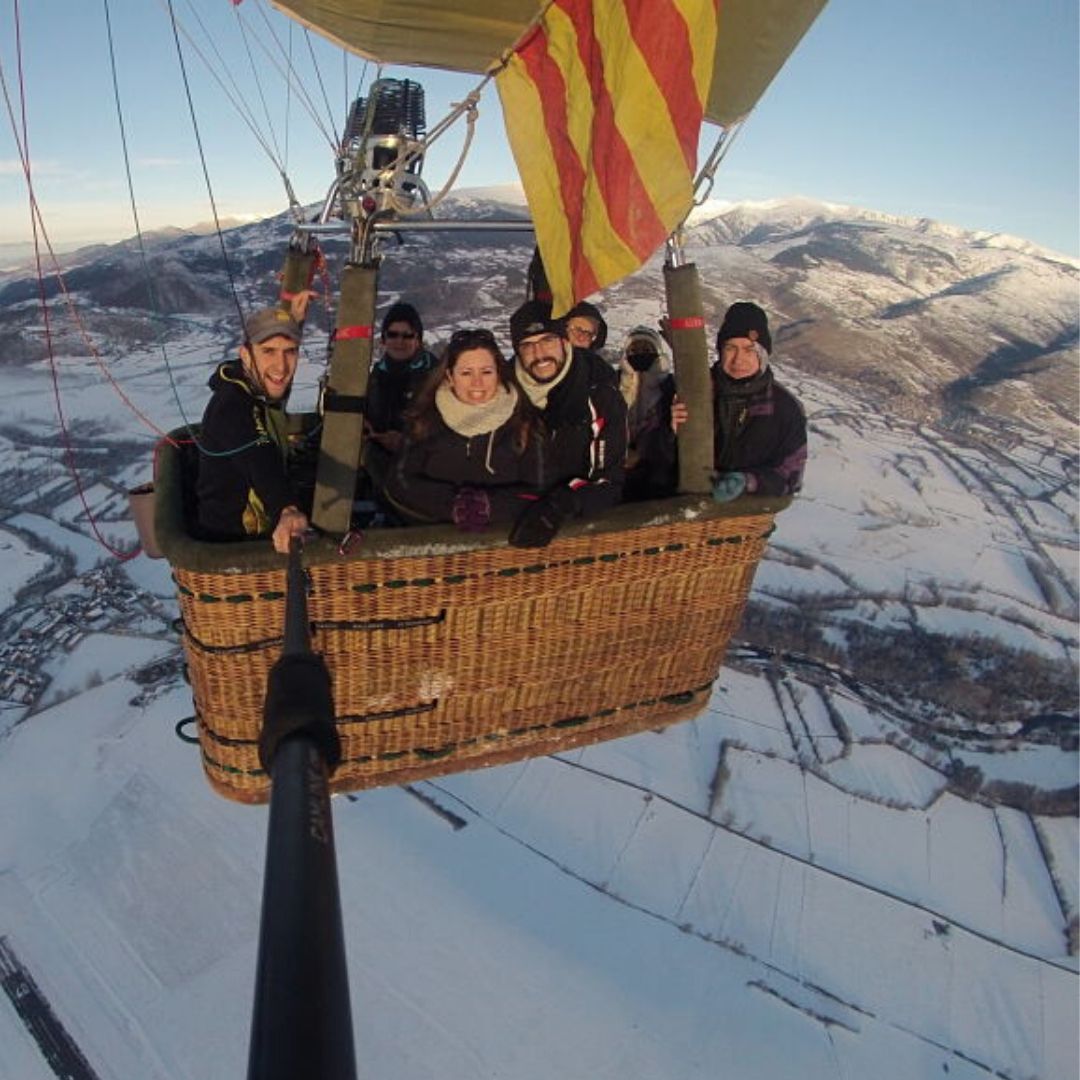
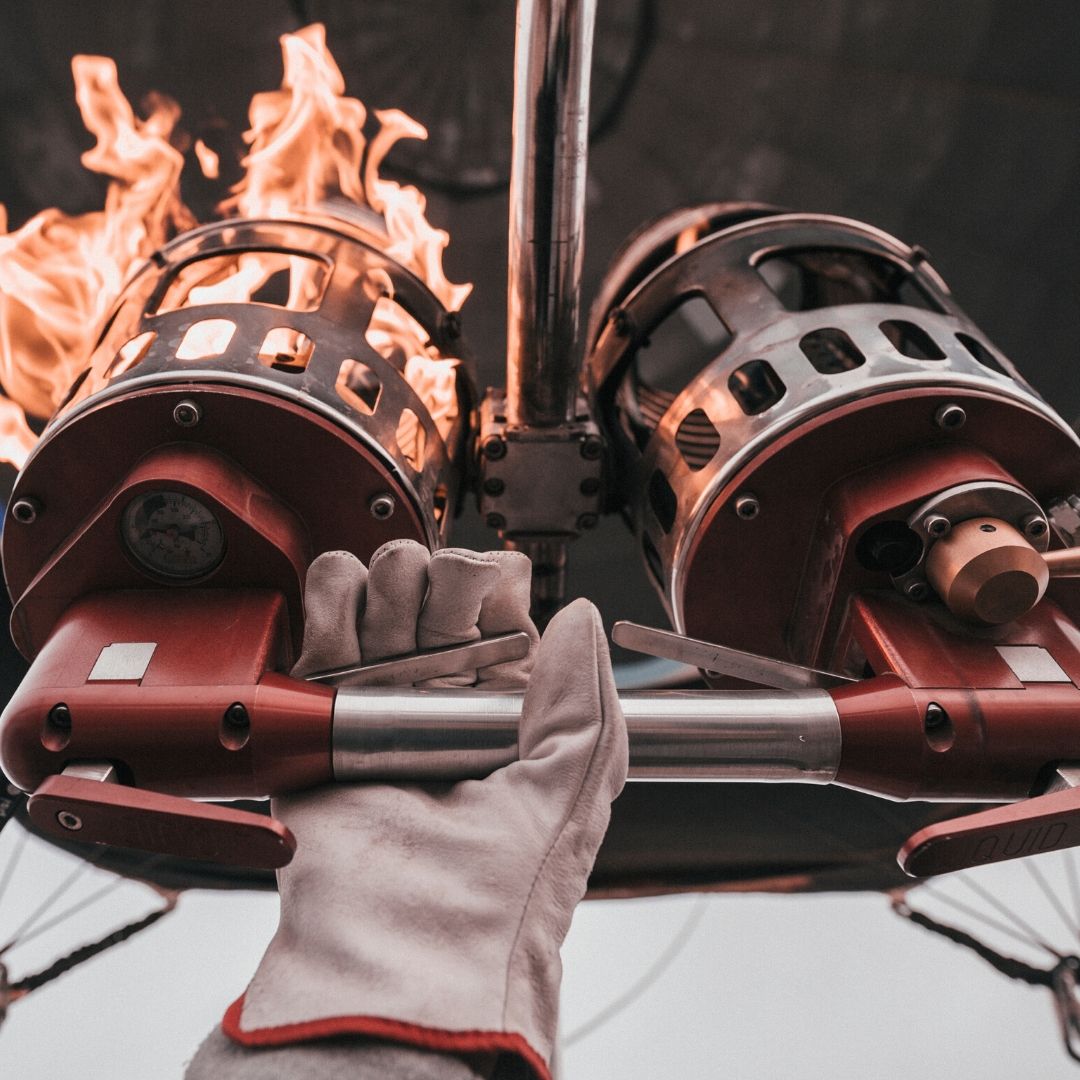
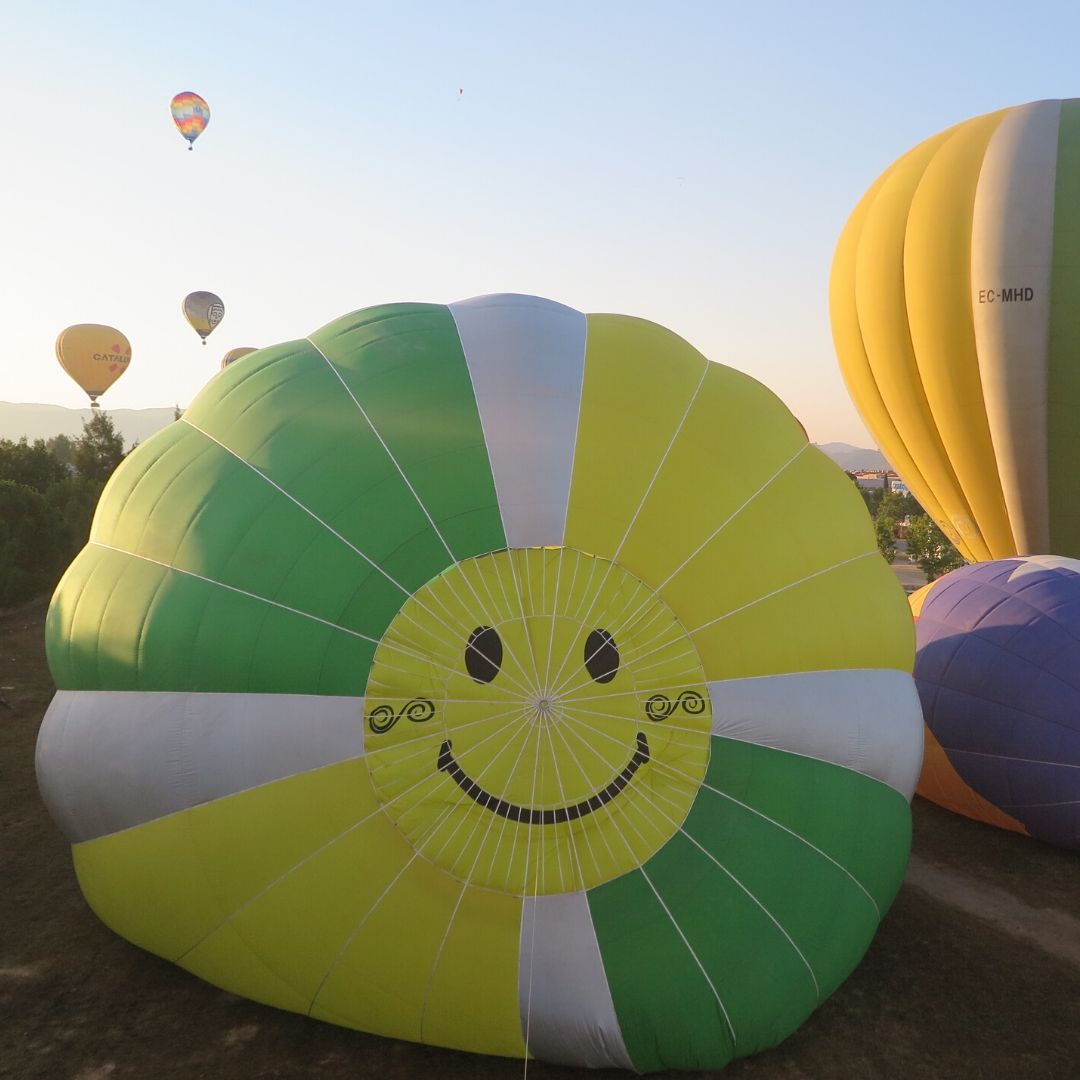
You can read more about the different parts of a hot air balloon here..
Ready to experience it? Book your hot air balloon flight with Camins de Vent.


