
A hot air balloon

What is a
hot air balloon?
A hot air balloon is an aircraft.
Why does a hot air balloon fly?
The hot air balloon flyies thanks to the Principle of Archímedes.
It says that "a body totally or partially submerged in a fluid at rest receives a push from bottom upwards equal to the weight of the volume of the fluid that displaces."
\n
To make it easier, the hot air inside the balloon allows it to fly.
The aircraft
The balloon has 3 main parts: the nasket, the burner and the envelope..
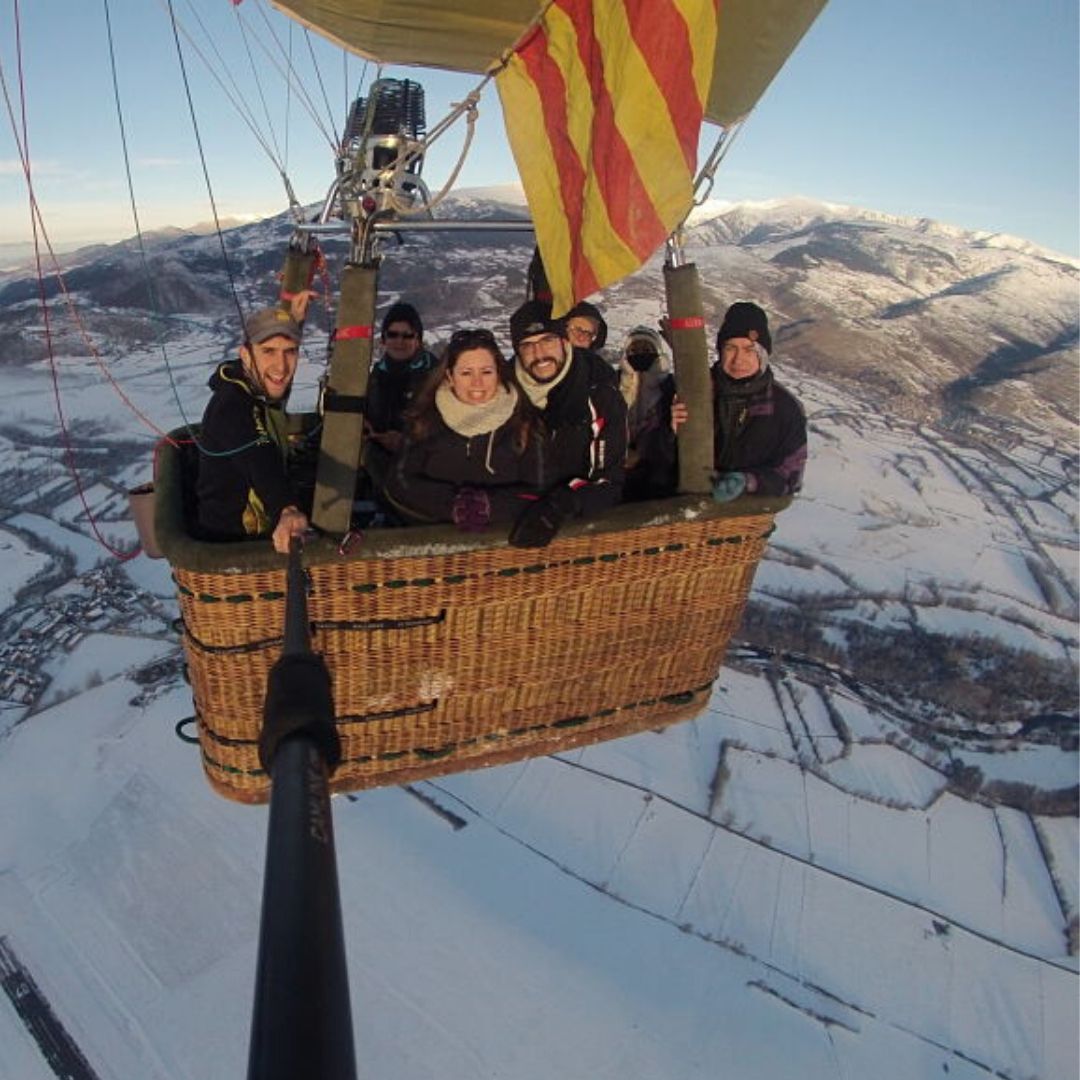
The basket There are a variety of baskets, sizes and designs. From a basket where only the pilot can fit, to baskets that can carry 30 passengers. One of the features of Camins de Vent is that we have accessible baskets with doors, where we can also put an homologed seat so that people with reduced mobility can also enjoy the experience.
The basket of the balloon it's handmade and made of rush. However, technology has evolved and occasionally the basket is made with lighter materials that allows the basket to fold.
There are also balloons that do not have a basket, and that the pilot sits with a seat carrying the gas cylinder and burner.
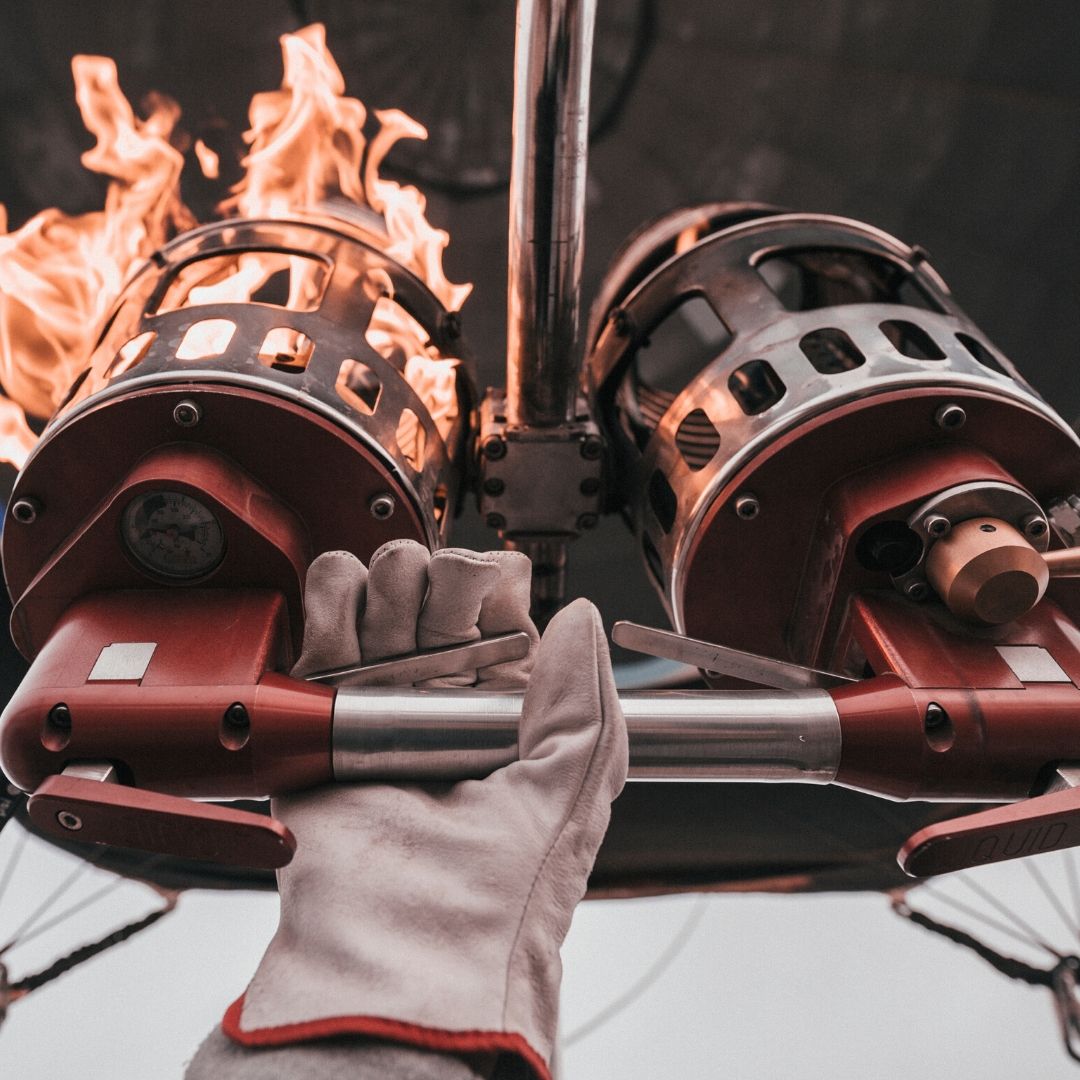
The burner The burners can do two different flames, the efficent one is the once already explained. The liquid flame is used to fly over forests and areas with animals. It is a silent flame and it is also more brighter. Therefore it is used on night events as it is more spectacular. The fuel used i by the burner is propane gas, stored in propane bottles.
The burner is the engine of the hot air ballloon. It warms the air of the envelope with a flame that has 600ºC and a power of 5m height.
The envelope
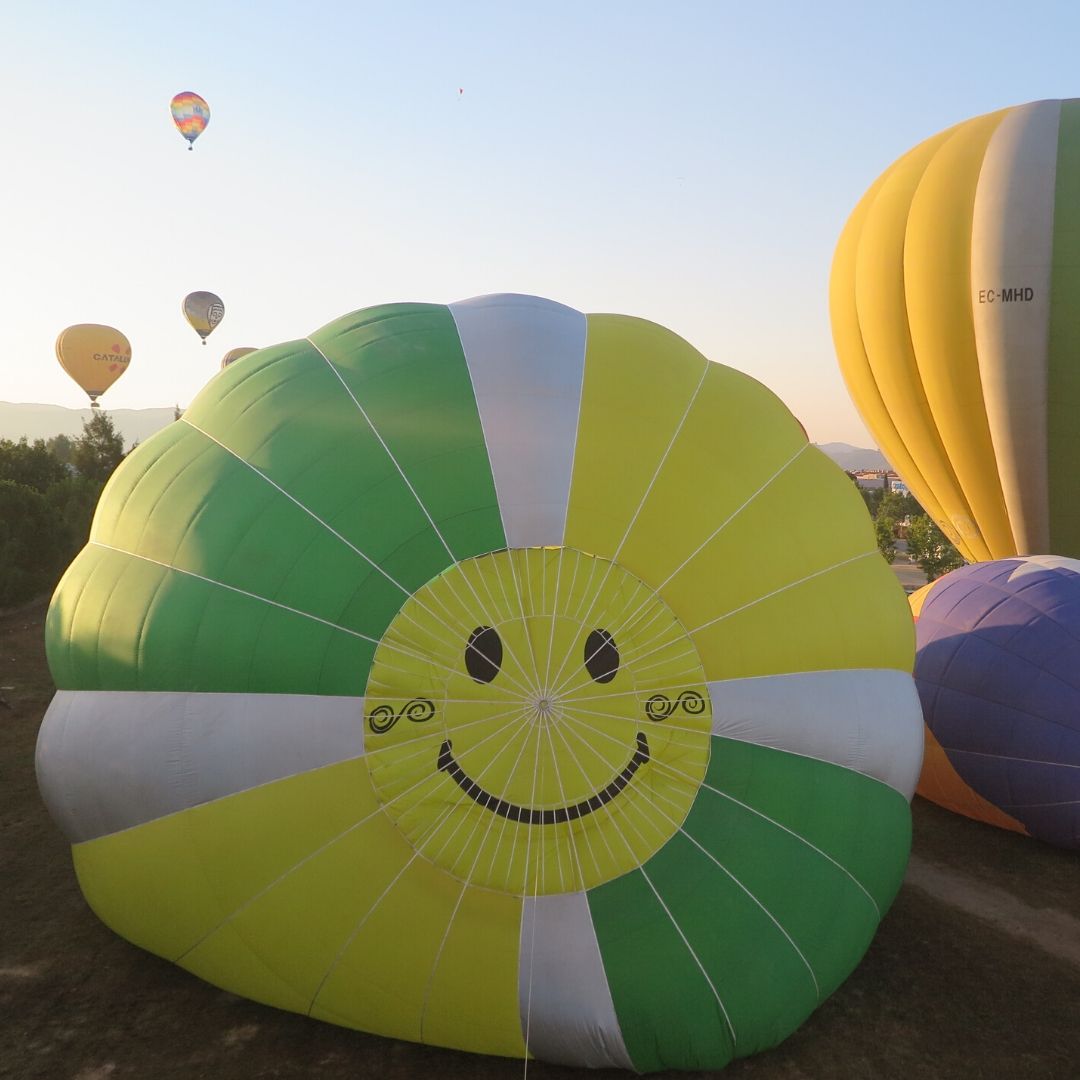
The envelope is the part of the balloon that is filled with air and causes it to rise. It is made of nylon, a thin, lightweight fabric that guarantees extraordinary strength and durability throughout flights.
\n
The designs of theenvelopes can be very varied depending on their purpose. Ultramagic, the leading company in the manufacture of balloons, has different types; for competition, for passenger flights and for advertising.
\n
\n
The more cubic meters of hot air a balloon's envelope can store, the more weight and more passengers it can lift.
You can read more about balloons here.
Frequently asked questions about hot air balloons
\nWho invented the hot air balloon and in what year?
\nWhy does a hot air balloon fly?
\nAt what speed and altitude does a hot air balloon fly?
\nWhat are the main parts of a hot air balloon?
\nWhat fuel does a hot air balloon use?
\nHow many people can fit in a hot air balloon?
\nCan a hot air balloon be steered?
\nIs flying in a hot air balloon safe?
\nRelated article: the European Balloon Festival in Igualada.
Ready to experience it? Book your hot air balloon flight with Camins de Vent.


